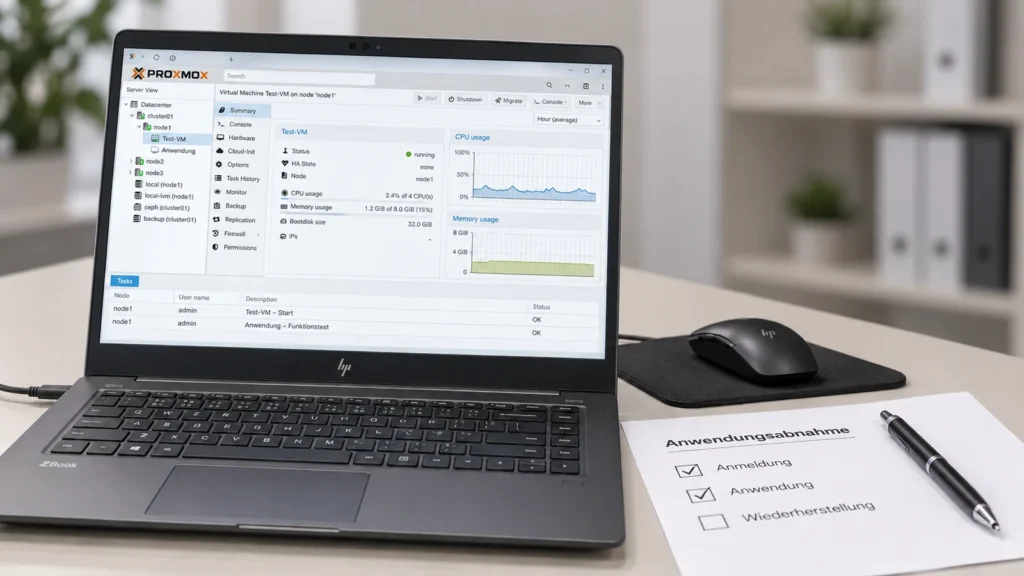
A cluster can handle the failure of an individual virtualisation host if its prerequisites are met. This does not automatically repair an accidentally deleted file or a damaged application. High availability and backup address different failure scenarios.
Which failure should HA handle?
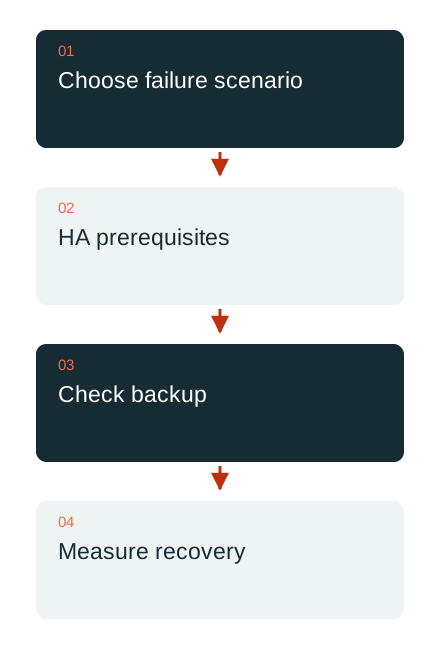
Proxmox HA monitors configured services and can restart them on available nodes after a suitable failure event. This involves detection, fencing the failed node and restarting the service. It does not imply a blanket promise of an uninterrupted application.
Quorum, fencing, networking and a suitable storage strategy form the foundation. The manufacturer’s documentation lists at least three cluster nodes for reliable quorum as a regular HA requirement. Alternative architectures are assessed separately; an additional small device is not automatically a full substitute for the required resources and storage paths.
The remaining resources must be sufficient
After a host fails, the remaining systems must be able to run the intended services. This includes memory, computing power, networking and the data that can actually be reached. Normal utilisation across all nodes in everyday operation does not show whether this reserve exists.
The storage decision is planned explicitly. Shared storage has its own dependencies, while replication has its own data freshness characteristics. A cluster diagram with several boxes therefore does not establish which data state is available or whether performance remains sufficient after a failure. The relevant failure scenario is tested in practice.

Backups preserve a different state
HA can also continue running an already faulty data state. Deleted content, damaged applications or certain consequences of an attack require suitable independent backups. Retention, access and the recovery environment are part of this design.
The restore test checks a selected business process. Starting a VM is an intermediate technical step; the responsible person must be able to use the application with the required data. Achievable recovery time and acceptable data loss are defined and measured as concrete goals.
Plan availability as a connected system
The assessment does not stop at the virtualisation software. Power, networking, DNS, identities and storage can be shared points of failure. A maintenance window needs a plan for the remaining resources and a suitable rollback path.
DAXS plans Proxmox around applications and operational requirements. A single, well-backed-up host can fit a particular need; other environments require an appropriately sized HA cluster. The decision follows the actual failure risk and demonstrated recovery, rather than simply the number of available servers.
Infrastructure and platforms · Backup and recovery · Discuss failure and recovery goals
Sources: Proxmox: documented HA requirements (external link) · Proxmox: features and recovery options (external link)