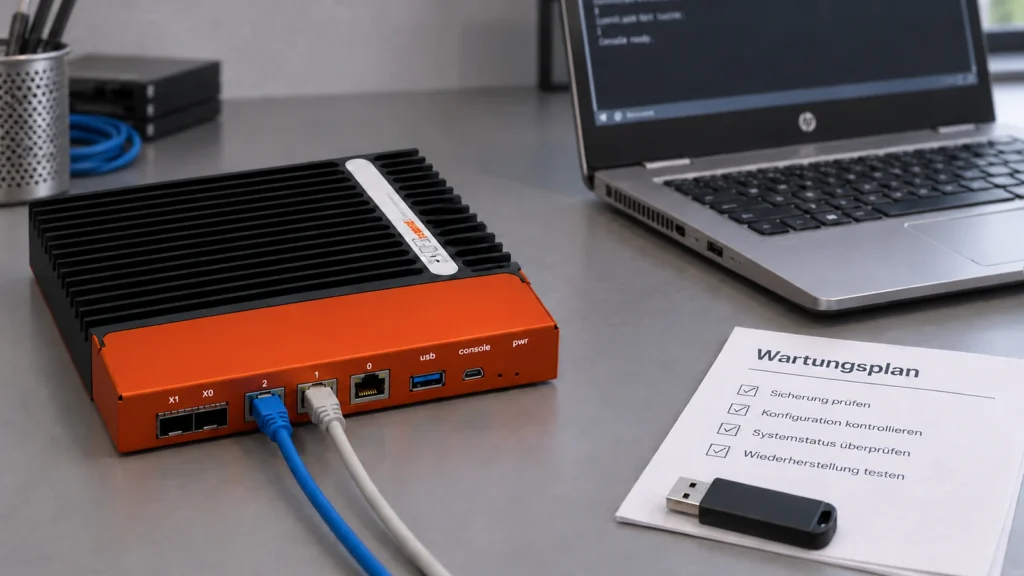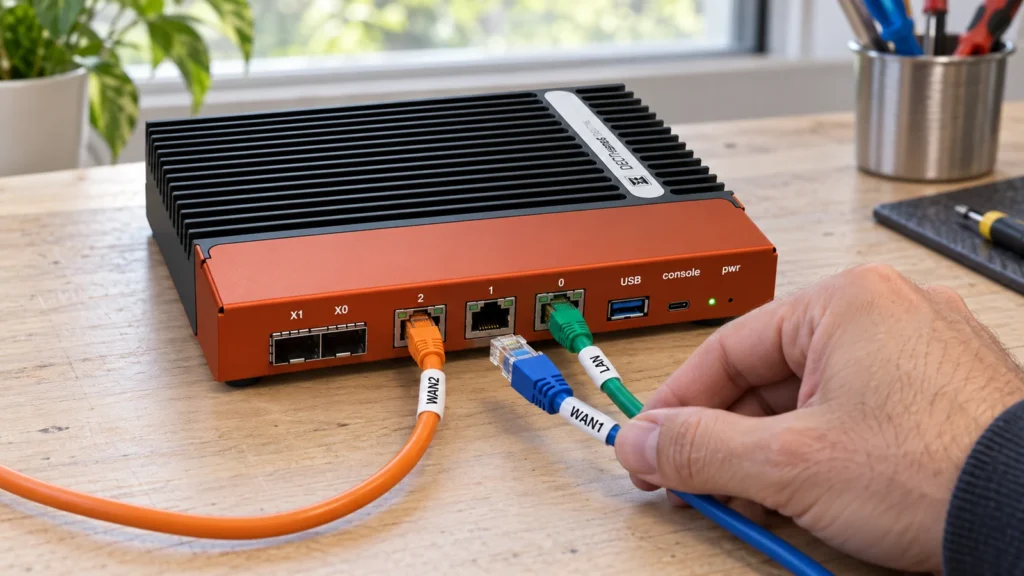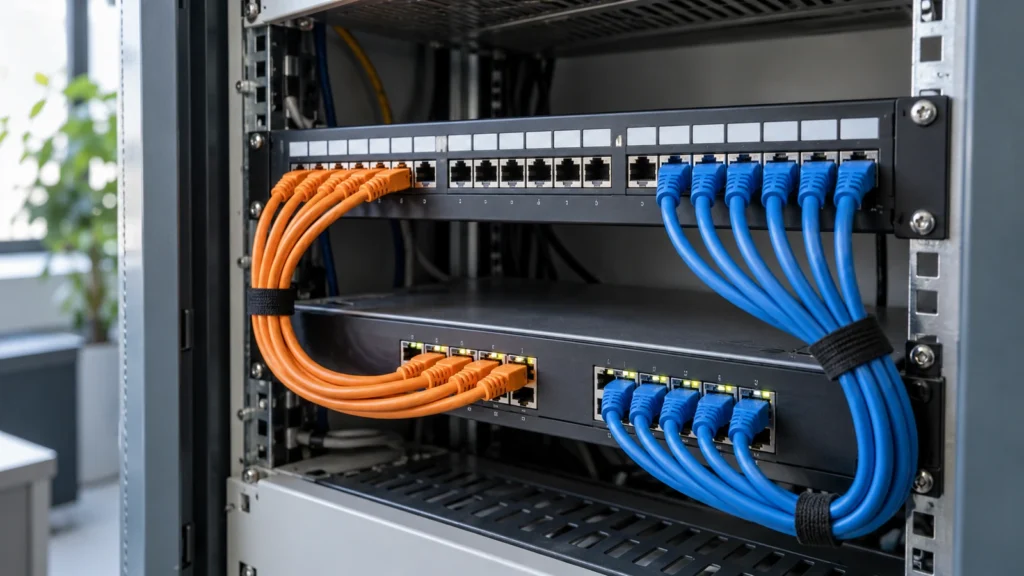
A printer, a visitor’s device and the file server do not all need access to the same network paths. Clear network zones make it possible to describe who needs which service. OPNsense can control the traffic between them; a sensible division starts with the company’s workflows.
From device inventory to permitted data flows
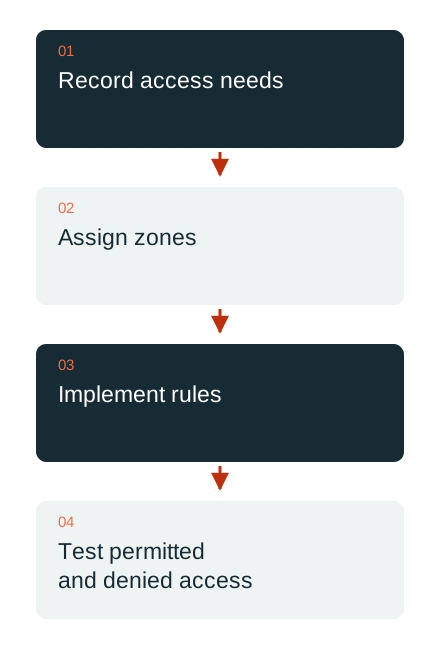
A small access matrix is a good starting point. It records the originating zone, required service, destination and business reason. A workstation may need a business application on a server. A guest device needs internet access. Switch management should only be reachable through a designated administration path.
The zones are then implemented technically, for example through VLANs and suitable switch ports. A VLAN name alone does not create a complete security boundary. Traffic between networks must actually pass through the controlled gateway; additional routers, overlooked wireless bridges and dual network connections belong in the checks.
Rules describe a specific purpose
OPNsense uses a stateful packet filter. Rules are considered in relation to the interface, direction, order and existing connection states. Reusable aliases can make a ruleset easier to read when their contents are clearly named and maintained. An alias called “Servers” does not replace a documented definition.
An access rule should describe specific destinations and the services needed wherever possible. An initially broad test rule is assigned an owner and an end date. Otherwise, a temporary diagnostic measure can quickly become permanent, opaque access. Changes are easier to assess when the business reason remains traceable in the rule comment.

Include NAT, name resolution and IPv6
Address translation and access rules serve different purposes. Public port forwarding needs an appropriate allow rule; a changed source address does not establish whether an application should be reachable. DNS, DHCP, time services and return paths must also continue to fit the environment after zoning.
IPv6 is explicitly included in the checks. An access matrix designed only for IPv4 may overlook a second active protocol family. Management interfaces, VPN connections and traffic originating from the firewall itself also require their own test paths. The ruleset should reflect the connections actually in use.
A small pilot reveals the dependencies
A manageable device group with a known workflow is suitable for the first step. The same applications are tested before and after separation. The test record also includes deliberately denied access: guests cannot reach the management interface, and a technical device cannot move freely into the server network.
DAXS connects network planning with existing switches, wireless networks, server services and ongoing operations. The result is a maintainable access matrix with understandable rules. The appropriate number of zones depends on protection needs, device management and maintainability; a large number of VLANs is not a quality goal in itself.
Infrastructure and platforms · Put technical safeguards in context · Discuss a network project
Sources: OPNsense: stateful firewall rules (external link) · OPNsense: network address translation (external link)