
In a shared inbox, several people may quickly read an enquiry while nobody takes ownership. Zammad can bring requests and their handling together. Its value emerges when the responsible person, next step and outcome are visible in the process.
Incoming requests need clear assignment
For typical concerns, define the responsible groups and the information required. A technical fault, for example, needs the affected application and its impact; a change request needs the desired outcome. The system should make missing information visible without making intake unnecessarily complicated.
Handling distinguishes internal notes from replies intended for external recipients. Permissions and groups are checked so that the right people see the information they need. A new ticketing system is not blanket permission to open all existing mailboxes and datasets to everyone.
Start automation with a limited, clear effect
Zammad triggers can respond to conditions with actions. A useful starting point is an assignment or status change that is easy to verify. Document when the trigger should apply and what effect is expected. The vendor documentation also specifies prerequisites for sending automatic emails through a group.
Automatic messages need appropriate recipients, clear wording and checks against loops or unnecessary repetition. An internal note must not accidentally go outside the organisation. Before deployment, non-sensitive test requests are used to check the entire path to the actual recipient.

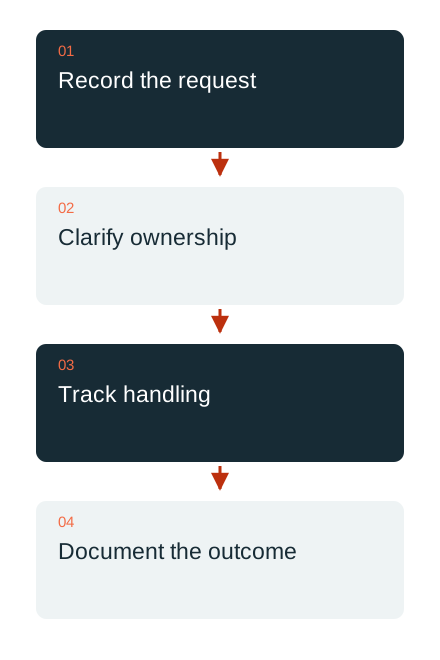
Deadlines reflect an agreement
Service-level rules can represent targets and escalation. They need suitable conditions and a calendar of the working hours actually agreed. Setting a countdown does not create additional staffing or availability.
For escalation to be useful, it must be clear who takes responsibility for the notification and what information it must contain. The question is not merely whether a deadline turns red, but whether this brings a useful decision forward. Agreed response and resolution targets are described separately and realistically.
Make completion useful for the next case
A completed request contains a traceable outcome. Recurring questions can lead to maintained help texts or a technical improvement. Responsibility and approval matter more here than generating the largest possible number of knowledge entries automatically.
DAXS supports process design, roles, interfaces and the introduction of Zammad. A small pilot with a few types of enquiry shows what information is needed and which automation really helps. The existing support portal and contact channels are not replaced without a deliberate decision to migrate.
Development and integration · IT in daily operation · Discuss support workflows
Sources: Zammad: triggers and automated actions (external link) · Zammad: service-level rules (external link)