
DAXS · HPE Infrastructure
From a single server to a full rack.
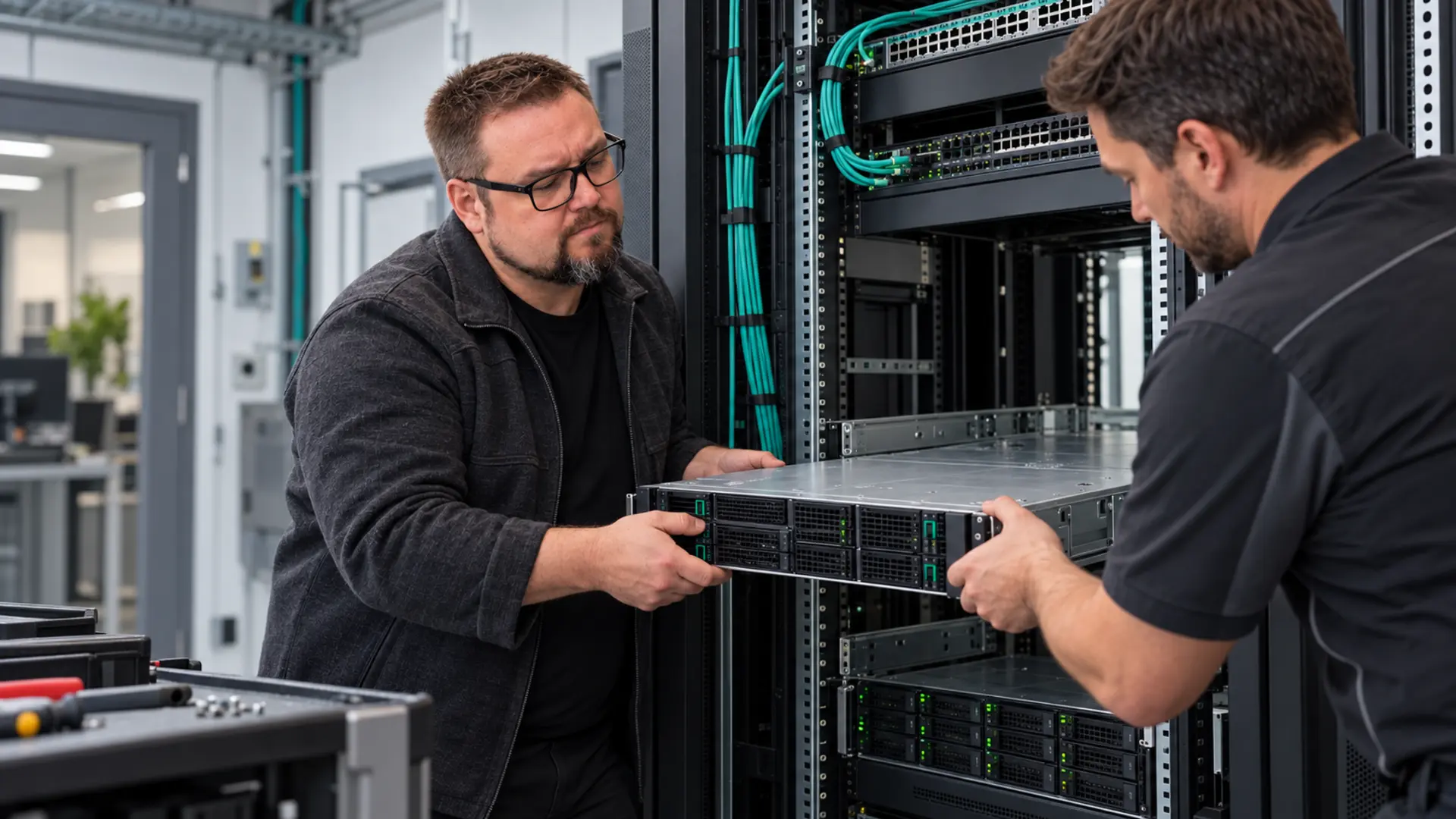
DAXS plans, delivers, installs, and supports HPE compute, storage, and networking solutions as a robust infrastructure for applications, data, and growth.
HPE Portfolio
Think of compute, storage, and networking as a single system.
Business applications rely on computing power, storage, networking, security, monitoring and a recovery plan. DAXS brings these layers together in a coherent architecture.
HPE ProLiant is the backbone for many small and medium-sized businesses. Depending on the task at hand, HPE Storage, HPE Networking, virtualization, backup, and cloud services complement the platform.
HPE Compute
ProLiant systems, ranging from compact entry-level servers to scalable rack platforms.
HPE Storage
Capacity, performance, availability, and recovery tailored to the data load.
HPE Networking
Switching, Wi-Fi and management across the HPE networking portfolio.
Private Cloud
Controlled local platforms for applications, data, and virtualization.
Hybrid Cloud
Combine local infrastructure with appropriate cloud services and clearly defined responsibilities.
Services & Lifecycle
Plan warranties, Care Packs, firmware, spare parts, upgrades and timely replacement.
ProLiant Selection
Select the platform around your applications.
A compact solution for small environments, local services, and manageable requirements.
Flexible tower systems for offices, equipment rooms, and growing local applications.
Rack servers for virtualization, databases, central services, and standardized data center environments.
Dense, specialized platforms for suitable workloads. Not every series is a good fit for every SME.
CPU, memory, storage, networking, redundancy, noise, installation depth, power supply, and support are all taken into account when determining the system configuration.
From Need to Operation
Plan the infrastructure as one system.
Applications, Load, Data, Growth, Location, and Existing Systems
Compute, Storage, Networking, Backup, Power, and Service Levels
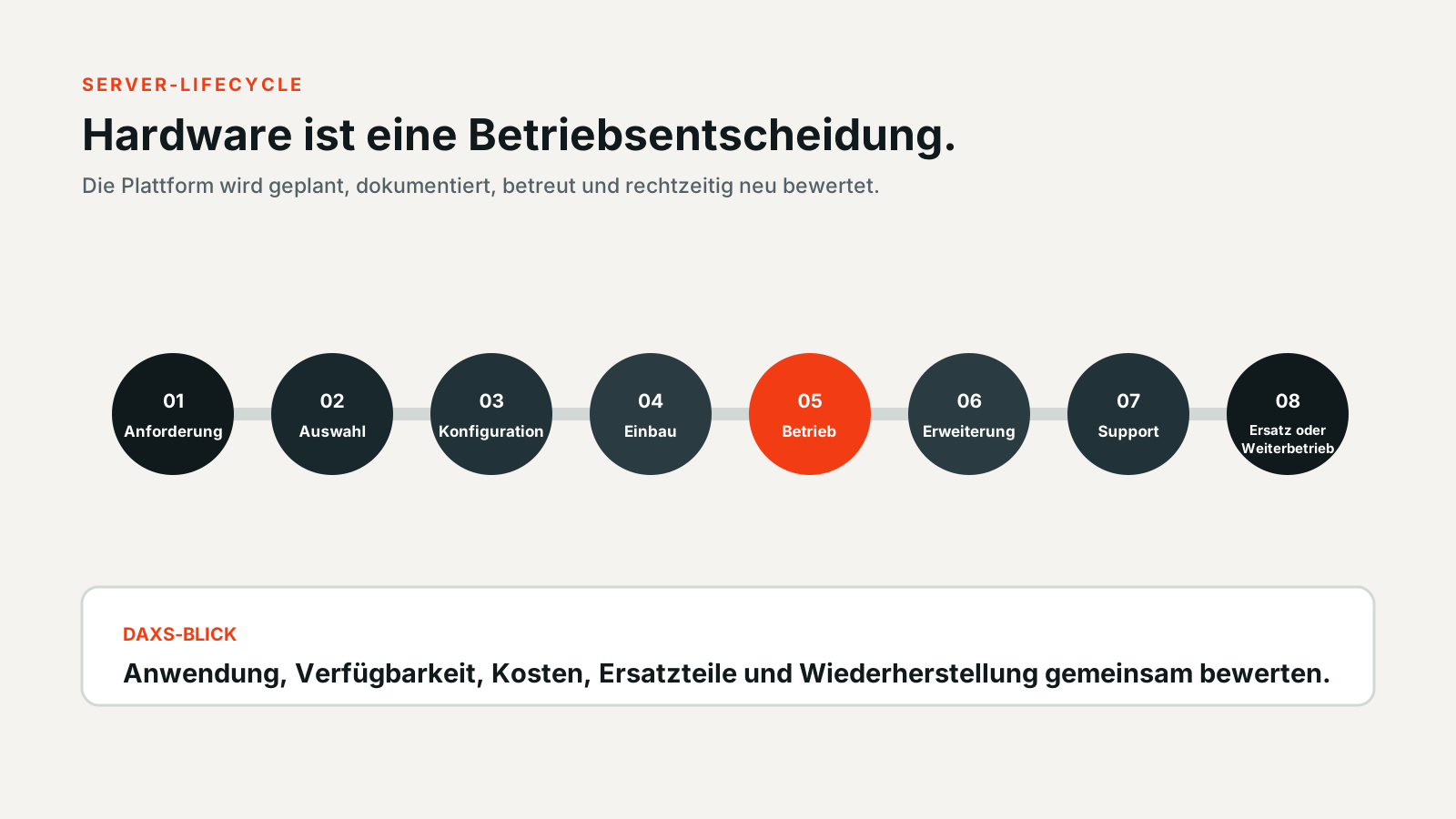
Rack, Cabling, Firmware, Operating System, and Migration
Monitoring, Updates, Documentation, Testing, and Lifecycle
Computing & Virtualization
Performance planned around your applications.
A domain controller, an inventory management system, CAD files, databases, terminal services, and virtual machines generate very different types of loads. DAXS plans for processor, RAM, local storage, controllers, network, and redundancy based on actual usage.
For virtualization, the host, storage, network, backup, and licensing are considered together. We assess existing VMware, Hyper-V or Proxmox environments and verify support and licensing for the chosen design.
Single server
A clearly defined task with proper safeguards and a documented restart procedure.
Virtualization Host
Consolidate multiple services, manage resources, and make maintenance more predictable.
Multi-host platform
Carefully plan availability, shared data storage, and maintenance windows.
Storage & Data
Storage planned for performance, availability and recovery.
Storage is planned based on access patterns, latency, growth, availability, and recovery. Local server drives, external storage systems, NAS, SAN, and cloud destinations serve different purposes.
RAID is no substitute for a backup. Snapshots are no substitute for an independent copy. DAXS documents which layer protects against hardware failures and how data is recovered following user errors, malware, or site outages.
Workload
Databases, files, VMs, CAD, and archives generate different I/O profiles.
Availability
Determine redundancy, spare parts, and acceptable downtime.
Protect
Backup destinations, retention, offsite copies, and protection against tampering.
Restore
Test the restart, clarify responsibilities, and document times realistically.
HPE Networking
Servers and storage systems require a reliable network.
Switching, Wi-Fi, segmentation, PoE, uplinks, and management are all sized in conjunction with servers and locations. In the current HPE Networking environment, Aruba technologies are integrated into the portfolio expanded by Juniper and Mist.
DAXS designs the network around required ports, speeds, power, redundancy, wireless coverage, management and integration with the existing security solution.
LAN & Switching
Access, uplinks, VLANs, server connectivity, PoE, and documented port assignments.
Wi-Fi
Coverage, capacity, guests, device classes, and secure administration.
Management
Configuration, overview, and troubleshooting specific to the selected platform.

HPE, HP, and Compaq
The history is easy to understand; today's responsibilities are clear.
Many companies still refer to "HP servers," even though Hewlett Packard Enterprise now manages the current infrastructure portfolio. HP Inc., on the other hand, is known for PCs, laptops, workstations, and printers. We still encounter legacy Compaq systems and older generations of HP equipment in existing environments.
DAXS provides support for inventory assessment, replacement, migration, and data transfer. For new workstations, HP business notebooks, desktops, workstations, printers, and DesignJet systems can be planned to integrate seamlessly with the HPE infrastructure. AI PC features are included when they support the intended workflow.
HPE Today
Servers, storage, networking, private and hybrid cloud, and infrastructure services.
HP Inc. Today
Business PCs, laptops, workstations, printers, and large-format output systems.
Existing systems
Identify older HP, HPE, and Compaq equipment, assess the risks, and phase it out in an orderly manner.
Care Pack & Lifecycle
Support is planned before a failure occurs.
Warranties and service extensions vary by system, term, and response model. DAXS verifies serial numbers and contract status, assigns Care Pack options, and distinguishes between manufacturer service and its own technical support.
After commissioning, the next steps include firmware maintenance, capacity monitoring, documentation, recovery testing, and timely replacement planning. This ensures that the infrastructure is operational rather than merely installed.
Frequently Asked Questions
Answers about HPE infrastructure.
What does HPE stand for?
HPE stands for Hewlett Packard Enterprise. The company focuses on infrastructure such as servers, storage, networking, private and hybrid cloud, and related services.
Is HPE the same as HP?
No. Since the split, HPE has focused on enterprise infrastructure. HP Inc. focuses on PCs, laptops, workstations, and printers, among other things.
What is HPE ProLiant?
ProLiant is HPE's server family. It includes various form factors and performance classes for on-premises services, virtualization, databases, and other applications.
When is a MicroServer a good choice?
For small environments with limited workloads, few local services, and manageable expansion requirements. Noise levels, storage media, backups, and performance reserves are still checked.
What is the difference between ML and DL?
"ML" typically refers to tower servers, while "DL" refers to rack servers. The appropriate form factor depends on the location, rack, scalability, noise level, redundancy, and operating model.
What are HPE XD systems?
XD platforms are designed for dense or specialized workloads. They are not automatically the right choice for traditional SMEs and are only deployed when the specific needs warrant it.
How is a server sized?
Based on applications, users, load, growth, memory access, virtualization, availability requirements, and support. It is not enough to consider only CPU cores or RAM individually.
Can DAXS take over an existing server?
Yes. Hardware condition, warranty, firmware, operating system, applications, storage, backup, network, and documentation are recorded first.
Can an old HP server still be used?
Technically, this is often the case; however, it is not always practical from an economic or security standpoint. Factors such as the risk associated with spare parts, energy consumption, firmware, operating system support, and recoverability are evaluated.
Does DAXS support virtualization?
Yes. The host, data storage, network, backup, licensing, and recovery are planned as a single integrated system.
What does "private cloud" mean?
A controlled, cloud-like platform in an on-premises or dedicated environment. Automation and scalability can play a role; the specific implementation depends on the needs.
What does "hybrid cloud" mean?
Local infrastructure and cloud services are deliberately combined. In doing so, data flows, identities, costs, security, and responsibility must be clearly defined.
What kind of storage do we need?
That depends on capacity, access patterns, performance, availability, growth, and the restore target. A blanket product recommendation without a load profile is unreliable.
Does RAID replace a backup?
No. RAID can handle individual hardware failures. It does not provide sufficient protection against deletion, encryption, misconfiguration, or damage at the storage location.
Does DAXS also plan the network?
Yes. Switches, VLANs, uplinks, PoE, Wi-Fi, server connectivity, management, and documentation are all part of infrastructure planning.
What do Aruba and Juniper have to do with HPE?
HPE Networking includes the long-standing Aruba portfolio and is expanded by the acquired Juniper and Mist technologies. The decision on which platform is appropriate is made on a project-by-project basis.
Can DAXS install a server in an existing rack?
Yes. Mounting depth, load capacity, rails, power, cooling, patch panels, switch ports, and maintenance access are checked in advance.
Does DAXS handle cabling and firmware?
Yes. Installation, proper wiring, firmware version, basic configuration, and documentation can all be part of the commissioning process.
What is an HPE Care Pack?
A service extension for certain HPE products. The term, coverage, and response model depend on the specific system and contract.
Is manufacturer support the same as DAXS support?
No. Manufacturer support covers agreed-upon product services. DAXS manages the specific customer environment, coordinates changes, and can assist with manufacturer-related issues.
How often should firmware be updated?
Regularly and on a risk-based basis. Compatibility, known issues, security updates, and maintenance windows are checked before the update.
How do you prepare for a server outage?
Through redundancy, backups, documented dependencies, a replacement and support strategy, and tested recovery procedures. Not every application requires the same level of protection.
Can DAXS also supply HP workstations?
Yes. HP business PCs and workstations can be configured and set up for CAD, engineering, analysis, and other demanding work environments.
What are the benefits of an AI PC?
Local AI acceleration can offload certain applications or enable new features. Software support, data protection, performance, and actual benefits remain crucial.
Does DAXS support HP printers and DesignJet?
Yes, if they are part of the corporate environment. The network, drivers, scan targets, permissions, usage, and services are all properly configured.
Can DAXS migrate systems from older hardware?
Yes. Applications, data, identities, interfaces, downtime windows, and failover paths are documented and tested prior to the migration.
How does an HPE project begin?
By conducting an assessment of the current system and requirements. Only then are the architecture, product class, service, migration, and ongoing support determined.
Next Step
Replace a server, expand a rack or redesign the infrastructure.
We'll start with applications, data, workload, inventory, availability requirements, and the desired operating model.