
DAXS · Server systems
Build the platform around the workload.
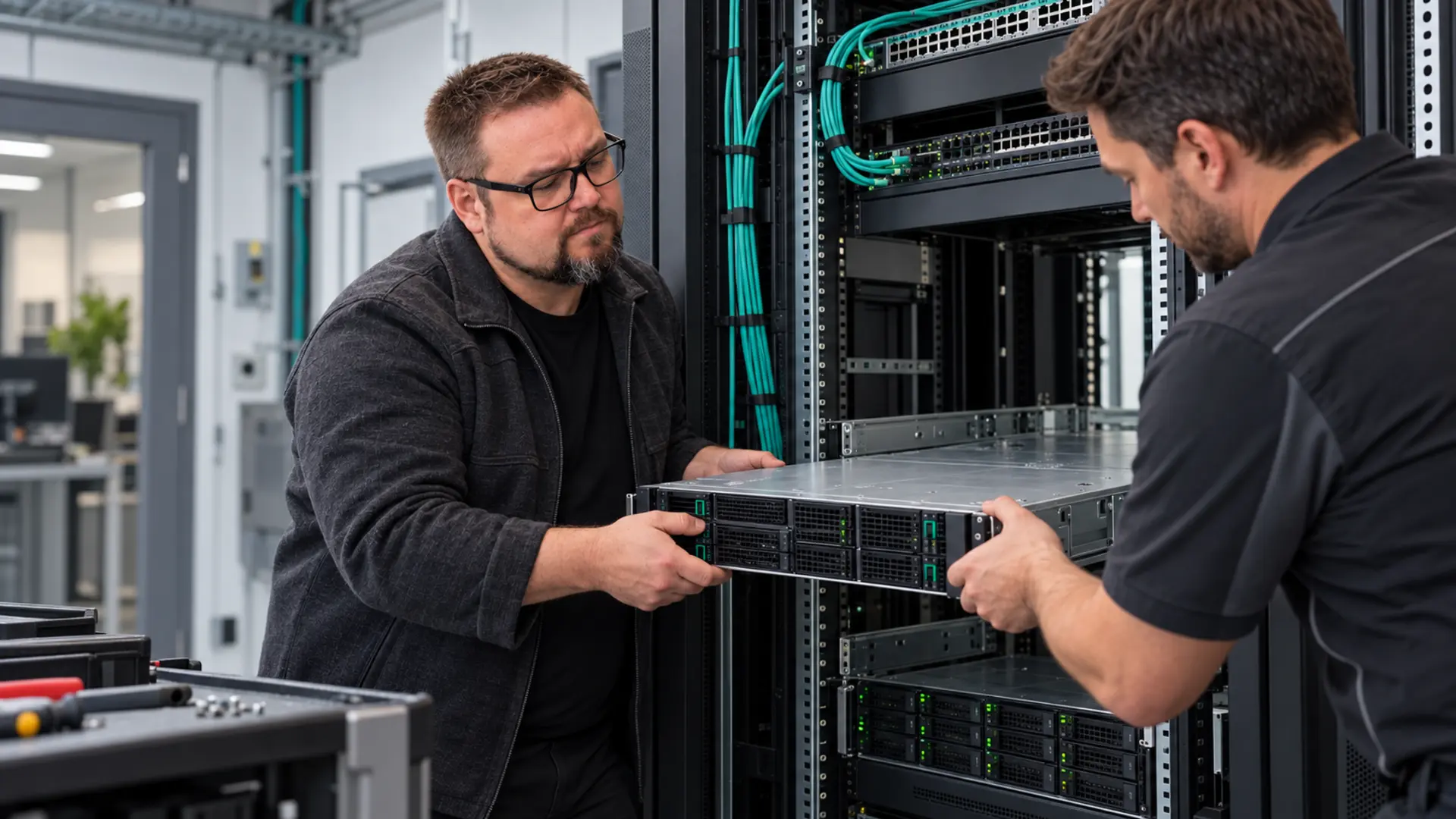
DAXS plans, deploys, migrates and operates server systems together with virtualisation, storage, networking, backup and monitoring. The aim is not the largest specification, but a platform that can be operated reliably and economically.
Start with the existing environment
Continue, modernise or replace for a reason.
Age alone does not decide whether a server should be replaced. DAXS assesses workload, condition, performance, support, spare parts, security, backup, recovery and the operational impact of an outage.
A sound result may be continued use, selective modernisation, stronger isolation, migration to a new platform or a hybrid model. Each option should have an understandable technical and economic basis.
One operating platform
The components have to work together.
Applications
Databases, file services, specialist software and remote workloads place different demands on the platform.
Compute
CPU, memory and possible GPU requirements are sized for actual load, growth and maintenance reserves.
Storage
Capacity, latency, redundancy and recovery requirements determine the storage design.
Virtualisation
Proxmox, Hyper-V, VMware or direct installations are tools. Compatibility, licensing and operations decide.
Network
Interfaces, segmentation, firewall paths and remote management connect the server safely to its environment.
Recovery
RAID, snapshots and redundancy do not replace a separate, documented and tested backup.
Local, data centre or hybrid
The architecture must fit the task.
Servers can run at the company site, in a data centre, in a private-cloud environment or together with selected cloud services. DAXS does not apply a cloud-first or on-premises-first rule. Data, applications, connectivity, responsibility, costs and recovery requirements define the design.
Controlled delivery
A migration needs a rollback path.
Inventory
Record hardware, applications, dependencies, licences, access and recovery requirements.
Design
Define target platform, capacity, responsibilities, backup and the operating model.
Test
Prepare data transfer, application checks, maintenance window and rollback.
Operate
Document the result and include monitoring, updates, support and recovery tests.
After commissioning
Operations are part of the system.
Firmware, operating systems, virtualisation, storage, monitoring and backup continue to change after deployment. Clear responsibilities and maintenance windows keep the platform manageable.
DAXS can take responsibility for the complete environment, support an internal IT team, or handle selected second- and third-level topics.
What should the next server step be?
We review the existing platform, applications, risks and growth, then define the next technically and economically sensible step.
Discuss the server environment